
Synopsis
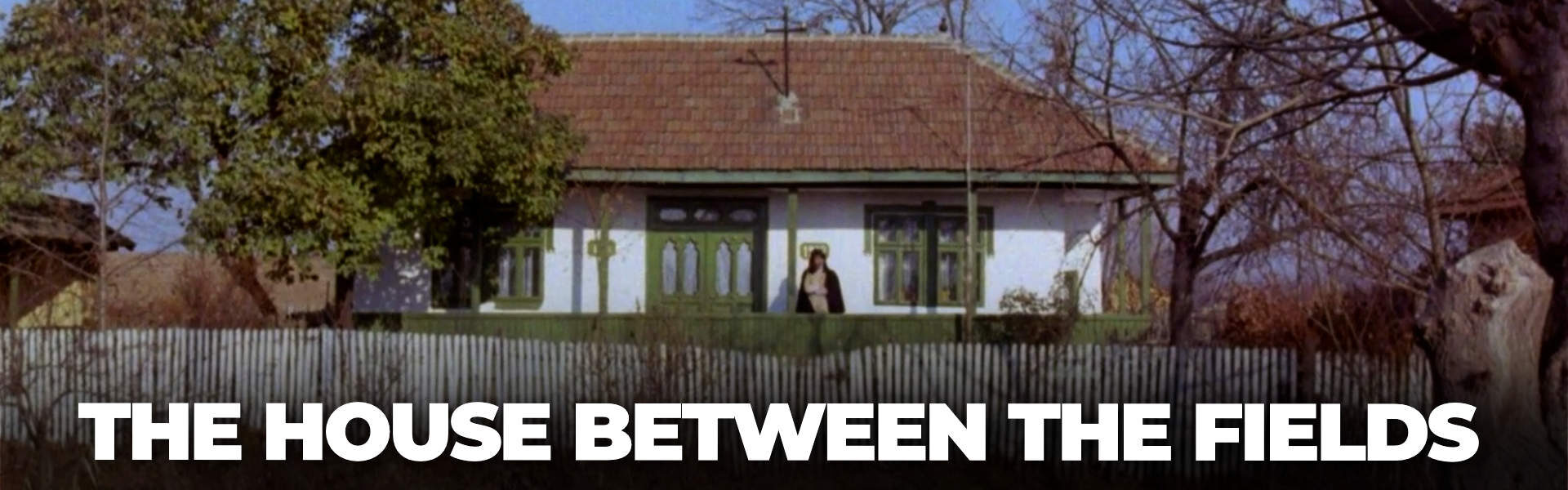
Foreword: In a farmers’ cooperative in a village on the plains, the cooperative’s president rules with an iron fist, ably assisted by his sycophantic henchmen. However, there is one couple — an agricultural engineer and his wife — who refuse to compromise and, as a result, must be silenced.
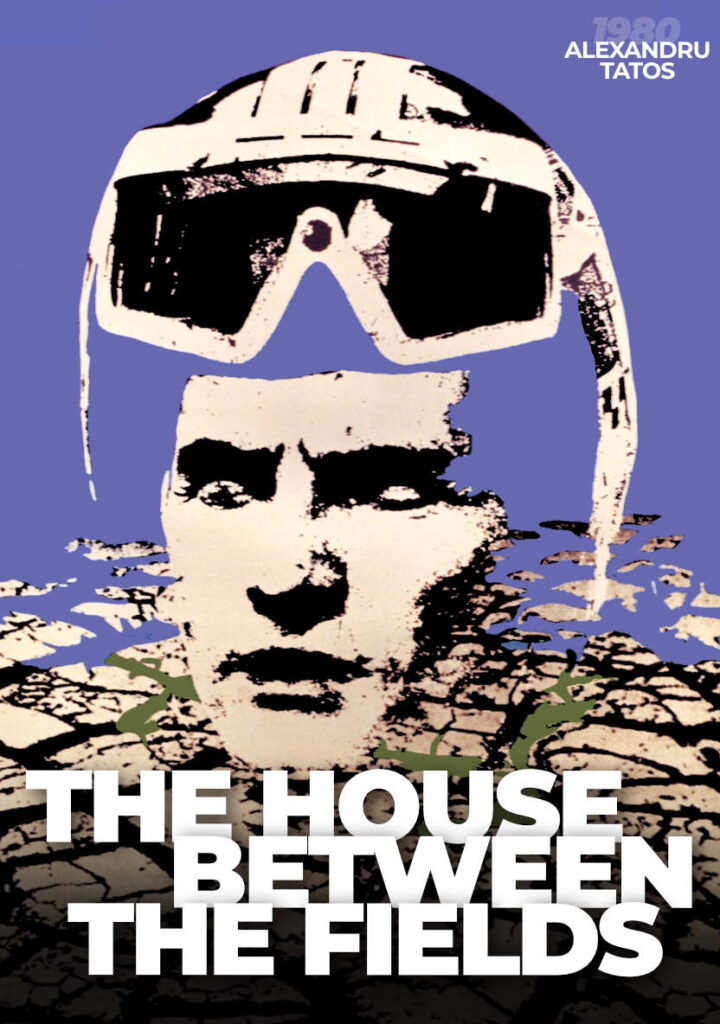
Directed by: Alexandru Tatos
Script by: Corneliu Leu
Cast: Amza Pellea, Mircea Daneliuc, Tora Vasilescu, Mircea Diaconu, Corado Negreanu, Dorel Vișan, Kitty Stroescu, Mihai Pălădescu
Producer: Sideriu Aurian
Cinematography by: Nicu Stan, Liviu Pojoni
Edited by: Iolanda Mîntulescu
Sound: Horia Murgu
Music: Lucian Meteoru
Year: 1980
Category: Feature film
Genre: Drama
Duration: 90 minutes
PLOT SUMMARY
In an agricultural production cooperative in a village on the plains, the rules are set by the cooperative’s arbitrary president, who is slavishly assisted by his henchmen: a seemingly dim-witted accountant who is actually a smooth operator, and the village militiaman. Standing in their way are only Radu, a young engineer who refuses to play along, and Voica, a beautiful girl whom the accountant would like to marry, but who is in love with Radu. This uncompromising couple must be silenced at any cost.
DIRECTORY STATEMENT
“The sounds and the music fulfilled him and brought him balance… It’s not a great film, but it doesn’t embarrass me either.” (Alexandru Tatos, in his “Diary”)
CRITICAL REVIEWS:
“The joy of reuniting with director Alexandru Tatos is profound and complete, for this television film truly represents him; it confirms his deep interest in contemporary issues, his passion for truth, his keen sense of civic duty, his clarity of thought, and his exemplary professionalism.” – Călin Căliman, “Cinema,” 1979
“In the early 1980s, director Alexandru Tatos rhetorically asked whether truly representative Romanian films were ‘the shapeless mass of faded films, steeped in exasperatingly simplistic ideas, churned out with a perseverance worthy of a better cause, according to the same long-outdated patterns’ or ‘the few exceptional titles that pop up here and there and, because they are so rare, seem to us much more important than they actually are.’” — Almanahul Cinema, 1980
“It is not the clichés of agricultural production conflicts between a zealous engineer and a backward-looking, ‘lifeless’ president of an agricultural production cooperative — one who is averse to the new generation — that set the tone in Tatos’s film, but rather his gaze upon a world overrun by kitsch, denunciation, and arbitrariness — the director’s favorite themes also in “Red Apples”, “Sequences” and “The Secret of the Secret Weapon”. Kitsch, nota bene, is observed by Tatos in the countryside, where the centuries had polished “a tradition of balance and grace”, and creative genius attained “a perfect dignity of expression.” – Nina Cassian, “Magazin Estival Cinema,” 1979)
“The strengths of the production are due to the director and the team (actors, set designers, composer, editors, sound engineers), who create a truly extraordinary dramatic experience.” — Ecaterina Oproiu
“Almost without exception, the presidents of agricultural production cooperatives invented by screenwriters [in recent Romanian films] come across as a bunch of ramshackle old men. Some are gloomy, others are sarcastic; some are burly, others are gaunt. Almost without exception, they all seem to have a biological inability to understand not only the collective good, but also their own personal good. If the darkness beneath their foreheads could serve as an energy source, dozens of villages could be electrified by the stupidity of conflicts like this one: the mayor has cement, but he doesn’t want to invest it in the levee. He wants to invest it — where? — in the town hall’s fence.” – Ecaterina Oproiu
“Amza Pellea delivers one of his finest performances in the film (alongside those in ‘Gently Was Anastasia Passing’ and ‘Impossible Love’), while Mircea Diaconu — a ‘scoundrel’ — breaks away here from the ‘good guy’ archetype (‘Stone Wedding’, ‘Red Apples’, , ‘Filip the Good’, ‘The Prophet, the Gold and the Transylvanians’), Dorel Vişan dons a policeman’s uniform for the first time, and Tora Vasilescu and Mircea Daneliuc form a couple on screen for the first time (as they would again in ‘Microphone Testing’ and ‘The Cruise’).” – Marian Rădulescu, agenda.liternet.ro
“All of Alexandru Tatos’s ‘anti-heroes’ and ‘anti-heroines’ fight for what the director, in his diary, called ‘the preservation of human dignity, trampled upon by the oppression of tyranny as well as by human cowardice.’” — Marian Rădulescu, agenda.liternet.ro
“What the bureaucrats in the Romanian film administration called ‘the whole and the truly serious events’ in ‘The House Between the Fields’ would be found in only a few films until the mid-1980s. The ‘intellectualization’ and renewal of cinematic language during those years (as evidenced by the films of Mircea Daneliuc, Iosif Demian, Dinu Tănase, Dan Piţa, Mircea Veroiu, Ada Pistiner, Stere Gulea, Constantin Vaeni, and Alexandru Tatos) remain to this day signs of a phenomenon that is as interesting as it is gratifying.” – Marian Rădulescu, agenda.liternet.ro
“‘The House Between the Fields’ is a paradox, because although Mircea Diaconu, Tora Vasilescu, and Mircea Daneliuc portray their characters convincingly — seeming to understand what they are playing — the dialogue written by Leu is so strikingly false and artificial that it seems to have been added after the film was made. Perhaps someone who would dare to watch the film without sound might appreciate Tatos’s mise-en-scène more, as well as the efforts of the actors and the rest of the film crew. An ordinary viewer, however, will be put off by the lines — which are not only implausible but also pompous and pretentious — conceived by the screenwriter.” – Andrei Rus, Film Menu 2009, agenda.liternet.ro
“Played by Amza Pellea, the president in this film is one of those imposing figures — not a scrawny one — witty rather than gloomy. (…) Amza Pellea’s belly plays a starring role in this film, and his demagogic imitation of a hearty laugh is a thing of beauty. All in all, what he offers here is a critique of the charisma he displayed so effortlessly during the same period in the role of Uncle Marin.” – Andrei Gorzo, cinepub.ro
“If Daneliuc and Vasilescu are warming up here for ‘Microphone Testing’, Tatos is doing his own for ‘Sequences’ (a 1982 film that deserves to be argued as, among all Romanian films made between 1948 and 1989 that challenge official communist myths and the standard ways of illustrating them, going the furthest).” – Andrei Gorzo, cinepub.ro
“The main strength of the film is that its central characters are brought to life with a satisfying degree of authenticity. In other words, it’s an actors’ film. Or, rather, it’s a film driven by star power. Even though it’s an ensemble film, what matters is that Vasilescu, Daneliuc, and Pellea are such sexually magnetic presences.” – Andrei Gorzo, cinepub.ro
TRIVIA:
- ‘The House Between the Fields’ (October 1980)was originally a television film (aired on television as early as 1979)
- Regarding the film’s pre-production process, critic Andrei Rus noted in a June 2009 issue of Film Menu magazine that Alexandru Tatos directed the film largely out of a sense of obligation to screenwriter Cornel Leu. “He was a key decision-maker at the studio that had produced the director’s previous films. Tatos felt that if he refused Leu’s project, he might lose the production studio’s support for making films on subjects that truly interested him. He would go on to make ‘The House Between the Fields’ without much enthusiasm, facing both ideological and casting issues before filming began. He would go through various emotional states regarding the project, but, based on his diary entries, he does not seem to have ever come to love it.” (Andrei Rus)
- Alexandru Tatos, born on March 9, 1937, in Bucharest, belongs, chronologically speaking, to the most prolific group in the history of Romanian cinema to date, the “1970 generation”.
- Trained as a theater director and a graduate of the relevant department at the Institute of Theater and Cinematographic Arts in Bucharest, like other great Romanian directors (Jean Georgescu, Victor Iliu, Liviu Ciulei, Lucian Pintilie), Tatos transitioned to film and television, with his first experience behind the camera coming with the series “August in Flames” (1974), co-directed with Dan Piţa.
- His film “Sequences” ranks fifth on the list of the 10 best Romanian films of all time, compiled in 2008 by 40 film critics.
- “Red Apples” is his first feature film for the big screen.
- The bust of Tatos, sculpted by Grigore Minea, has stood since 2003 in the square on Toamnei Street, near Salcâmilor Street, where the director lived his entire life.
ARTICLES:
- The House Between the Fields – istoriafilmului.ro
- Alexandru Tatos, from Red Apples to The House Between the Fields – istoriafilmuluiromanesc.ro
- The House Between the Fields – tvr.ro
- Review: “The Synonym of the Eloquent, Meaningful Natural”, by Marian Rădulescu – agenda.liternet.ro
- Review: “Something Good from Romanian Cinema”, by Marian Rădulescu – agenda.liternet.ro
- Review: “The Films of Alexandru Tatos”, by Andrei Rus – agenda.liternet.ro
This premiere is part of a national archive project supported by the Romanian National Film Centre.
Special thanks goes to the Romanian Filmmakers Union and to the Romanian Film Archive.


