
THE WAY I SPENT THE END OF THE WORLD (2006) – drama film online
- September 15, 2006
Synopsis
Foreword: “The Way I Spent the End of the World” is Cătălin Mitulescu’s debut film, which was screened and awarded (in the Un certain regard section at the 2006 Cannes International Film Festival).
A film about how a 7-year-old boy (Timotei Duma) saved us from Ceaușescu, and a 17-year-old girl (Dorotheea Petre) was able to decide her own future — a tragicomedy with touches of the absurd and the sublime.
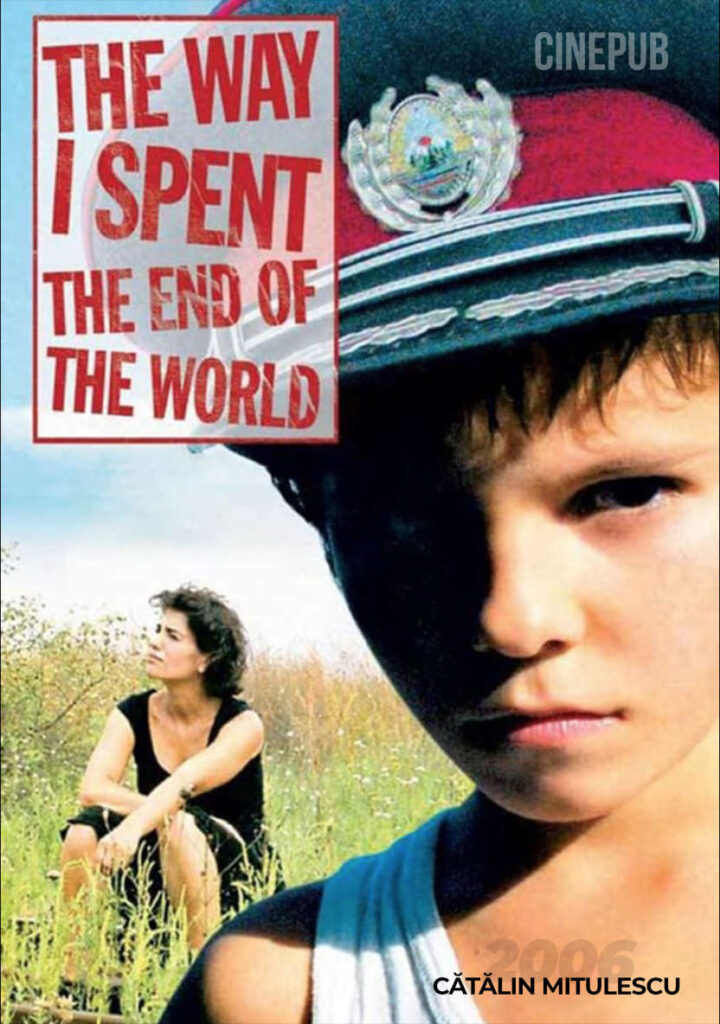
Directed by: Cătălin Mitulescu
Script by: Cătălin Mitulescu
Cast: Dorotheea Petre, Timotei Duma, Marius Stan, Marian Stoica, Ionuț Becheru, Cristian Văraru, Mircea Diaconu, Carmen Ungureanu, Nicolae Praida, Cristian Nicolaie
Producer: Cătălin Mitulescu, Daniel Mitulescu, In-Ah Lee, Philippe Martin, David Thion, Martin Scorsese (executive producer), Wim Wenders (executive producer)
Cinematography by: Marius Panduru
Edited by: Cristina Ionescu
Sound: Yves Marie Omnes
Music: Alexander Bălănescu
Year: 2006
Category: Feature film
Genre: Drama
Duration: 101 minutes
PLOT SUMMARY
Bucharest, 1989. Eva (Dorotheea Petre), her younger brother Lalalilu (Timotei Duma), and their parents live in a working-class neighborhood on the outskirts of the capital. Lalalilu is 7 years old and adores Eva. Eva is 17 and has fallen in love for the first time. Eva’s life changes, however, on the day she and Alexandru accidentally break Ceaușescu’s bust at school. They are caught and asked to make a self-criticism in front of a Communist assembly. Forced by his father, Alexandru humiliates himself and gets off scot-free. Eva refuses, is expelled, and transferred to a vocational school on the outskirts of town. She leaves Alexandru and, together with Andrei, hatches a plan to flee Romania. They intend to swim across the Danube. Witnessing the two’s departure, Lalalilu makes the decision of his life.
AWARDS:
- 2005 – Sundance – NHK Award – Best European Project
- 2006 – Cannes International Film Festival, Un certain regard section – Best Actress Award (Dorotheea Petre)
- 2006 – International Independent Film Producers Festival – Best Film Award
- 2007 – Gopo Awards – Best Editing Award
- 2007 – Gopo Awards – Best Original Music Award
- 2007 – Gopo Awards – Best Production Design Award
- 2007 – Gopo Awards – Best Costume Design Award
- 2007 – INNSBRUCK – Audience Award
FESTIVALS:
- 2007 – Academy Awards – Romania’s entry in the “Best Foreign Language Film” category
DIRECTOR’S STATEMENT
“No matter what script I wrote, I couldn’t move past my high school years, past Colentina, the neighborhood where I grew up — just as Andreea couldn’t move past the childhood stories in which she made plans to kill Ceauşescu. That’s how I wrote the script. I’ve always dreamed of a film where time flows like it did in Ceauşescu’s era — a film with teenagers, with children, with love, with betrayals, a film that captures the rhythm of those times. Honestly, I miss that era; I miss how we laughed back then, how we had fun. I tried to bring that into the film. I tried to create a world full of life upon which the Revolution would suddenly descend, changing destinies.” – Cătălin Mitulescu, in an interview with Iulia Blaga – agenda.liternet.ro
CRITICAL REVIEWS:
“Cătălin Mitulescu’s debut film is a delightfully told story. Dorotheea Petre is a magnetic new presence on the screen. Mitulescu has successfully balanced tragicomic tones, giving the viewer the sense that ordinary, far-from-heroic people lived during that era, who stood fearfully in the shadows until the revolution suddenly shattered their world.” — Deborah Young, “Variety”, May 25, 2006
“The film satisfies both the taste for auteur cinema and for commercial cinema; it should be a huge box-office hit if promoted as such. In a confident debut, Mitulescu is well served by the entire cast and especially by Dorothea Petre’s luminous performance as Eva.” — Bernard Besserglik, “Hollywood Reporter,” 2006
“The film’s main strength lies in its substantial, accurate, and gripping recreation of the era in which the action takes place — namely, the final (roughly eight) months of the Ceaușescu regime — with the plot focusing on the last gasps of the sad and painful ‘golden age’.” – Călin Căliman
“This film marks, within the Romanian cinematic landscape, the transition from an aesthetic of despair to one of hope. (…) A well-told story about a troubled period, an endeavor resulting from an authentic way of ‘feeling’ communism, very well supported by the actors, direction, and screenplay. A therapeutic film about the past.” – Anda Cadariu, “Bucureștiul cultural”, June 2006, agenda.liternet.ro
“Cătălin Mitulescu (almost) succeeds in an impossible gamble with the viewer: he draws them into the past in an ambivalent, paradoxical manner: on the one hand, he reawakens the demons of a detestable past, and on the other, he knows that the nostalgic viewer possesses the ability to become attached to objects, but as lost objects—a notion close to psychoanalytic language.” – Mirel Bănică, agenda.liternet.ro
“It’s one of the best Romanian films. It doesn’t strike you as a masterpiece of directing or screenwriting, but you immediately feel a connection to it. A connection to who you once were.” – Eduard Țone, “Aproape”, agenda.liternet.ro
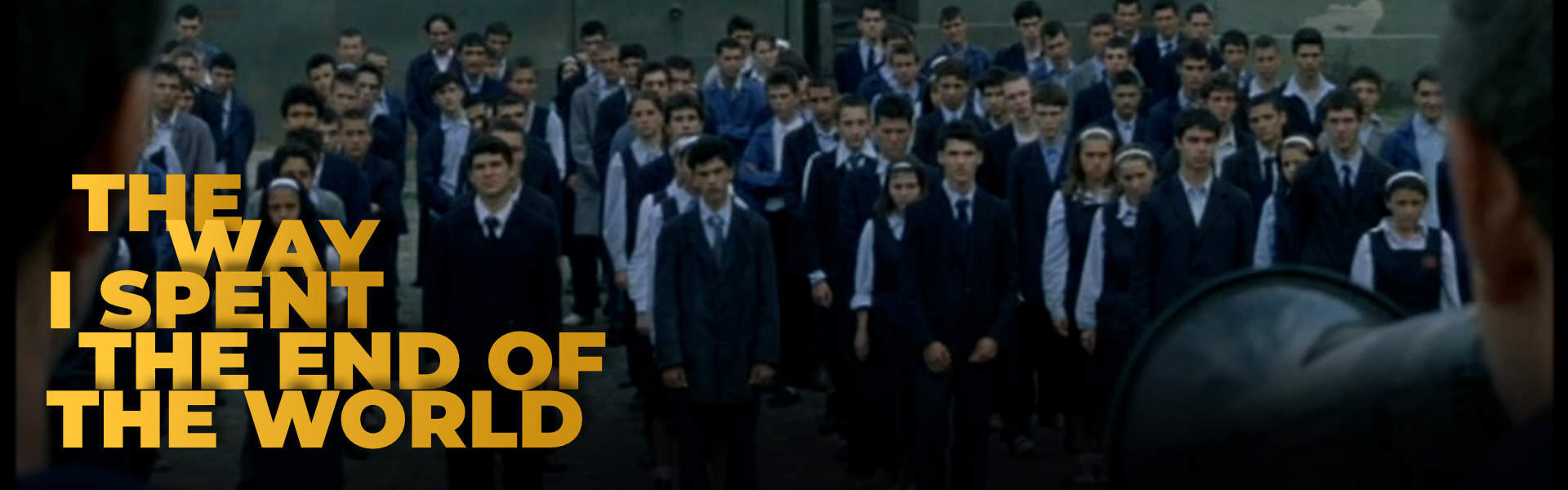
“The film is very beautiful. It starts off very grim. Gloomy people, drab clothes, a sombre, oppressive atmosphere, famous photos of Ceauşescu in a festive setting… and suddenly, Uncle Nicu’s famous ‘two-eared’ portrait… looking different! Distorted, almost caricatured! A sign that ‘something’ isn’t right! And indeed, it isn’t! The little boy of about nine in the center of the scene is chosen with great fanfare so that the Leader himself can present him with a wheel of cheese… at which point we realize that, like Fellini in “Otto e mezzo”, Mitulescu has chosen to draw us into the universe of his film through a dreamlike gateway. (Like Fellini, like Buñuel often, like Tarkovsky at times, like Daneliuc in many places… But that’s all right. The dream always remains an inexhaustible vestibule!) – Mihnea Columbeanu, October 2006, agenda.liternet.ro
“I think Cătălin Mitulescu’s film makes a greater impression on you because of what it might stir up inside you rather than what it offers you. (…) We, who were too young to reason, to struggle with poverty, to make compromises — big or small — look back on that time with great nostalgia.” – Iulia Blaga, agenda.liternet.ro
“Mitulescu is very good with details. (…) The problem is that the passionate accumulation of objects from the communist era’s props does not guarantee the authenticity of the vision, and that the thrill of nostalgic recognition does not substitute for knowledge; and in the absence of knowledge, of that deeper authenticity, nostalgia is just a kind of debauchery — it means nothing.” – Andrei Gorzo, agenda.liternet.ro
“Placed in the category of films about the Revolution — or, rather, about the time before the Revolution and a little after — it is a Romanian film for collectors. I say this not because it is exceptionally good, but because, broadly speaking, that is what it does: it collects. You get the feeling that someone has diligently gathered all the symbols from Ceaușescu’s era and then dumped them in a heap on the screen.” – Daniel Goace, “Academia Cațavencu”, September 2006, agenda.liternet.ro
“‘The Way I Spent the End of the World’ is, without a doubt, a coming-of-age film in which the director and his co-screenwriter drew on their own teenage memories. (…) It is a film open to multiple interpretations, one that has stood the test of time.” – Mihai Fulger, cinepub.ro
TRIVIA:
- The Way I Spent the End of the World is director Cătălin Mitulescu’s debut film.
- Work on the film began as early as 2004; it moved into pre-production once casting was completed in June 2005.
- The film was screened in 2006 at Cannes, alongside other Romanian films (12:08 East of Bucharest, directed by Corneliu Porumboiu, and Marilena from P7, directed by Cristian Nemescu).
- Filming took place in Bucharest and the suburb of Voluntari (with the exception of a few scenes shot in Eșelnița and near the Danube locks) during the summer and fall of 2005.
- Dorotheea Petre (Eva) graduated from the acting department of the National University of Theatre and Film (UNATC) in Bucharest. Prior to this film, she played the lead role in the feature film Ryna, the directorial debut of Ruxandra Zenide.
- Timotei Duma made his film debut in the role of Lalalilu. After this role, however, he decided to give up acting.
- Likewise, for Ionuț Becheru (Vomică), this was his first appearance in the world of cinema. He, too, did not pursue a career in this field.
- Cristian Văraru (Andrei) was noticed by Cătălin Mitulescu while performing a one-man show at the MaiArt festival. He then went on to study music.
- Marius Valentino Stan (Tarzan) was selected for the role by Emil Slotea, the film’s first assistant director, who cast him in the role that, like his colleagues, marked his debut as an actor.
LINES:
• “Did all Romanians have baby teeth? Even Ceaușescu?” – Lalalilu (Timotei Duma)
• “Please stop talking about both God and Ceaușescu.” – Mother (Carmen Ungureanu)
• “Anyone who doesn’t want to pass the year goes to work. Or, if you don’t like that either, to jail.” — The principal of the industrial high school (Florin Zamfirescu)
• “This is what awaits you if you don’t know how to appreciate what the state does for you.” — The principal of the industrial high school (Florin Zamfirescu)
• “What business do you have with him? He has problems. Both he and his family have problems.” – Father (Mircea Diaconu)
• “To succeed, we have to work without emotions or feelings. I am more than just this body you might fall in love with.” – Andrei (Cristian Văraru)
• “Do you want me to take my clothes off too?” — Eva (Dorotheea Petre)
• “I made you, I’ll kill you.” — Father (Mircea Diaconu)
ARTICLES:
- The Way I Spent the End of the World. Strada Film – stradafilm.ro
- The Way I Spent the End of the World – istoriafilmuluiromanesc.ro
- The Way I Spent the End of the World – tvr.ro
- Review: “The Therapeutic Apocalypse,” by Anda Cadariu – agenda.liternet.ro
- Review: “A Few Reflections on Nostalgia,” by Mirel Bănică – agenda.liternet.ro
- Review: “Almost,” by Eduard Țone – agenda.liternet.ro
- Review: “The Way I Spent the Afternoon of October 5,” by Mihnea Columbeanu – agenda.liternet.ro
- Review: “The Way We Spent the End of the World,” by Iulia Blaga – agenda.liternet.ro
- Review: “In Everyone and Everything,” by Andrei Gorzo – agenda.liternet.ro
- Review: “The Way I Spent the End of the World,” by Daniel Goace – agenda.liternet.ro
- Review: “Good-bye, Ceaușescu!,” by Alex. Leo Șerban – agenda.liternet.ro
- Review: “The Therapeutic Apocalypse,” by Anda Cadariu – agenda.liternet.ro
- Review: “The End of the World Comes Later in the Evening (Or Not)”, by Iulia Popovici – agenda.liternet.ro
- Interview: “Cătălin Mitulesc: The Official Selection at Cannes Isn’t the UEFA Cup, It’s the Champions League,” by Iulia Blada – agenda.liternet.ro
This premiere is part of a national archive project supported by the Romanian National Film Centre.
Special thanks goes to the Romanian Filmmakers Union and to the Romanian Film Archive.


