
Synopsis
Foreword: From the director of the famous “Angela Goes On”, the film “Grant Mitigating Circumstances?” has the very interesting distinction of never having been circulated online (…), so we can consider it a sort of hidden gem. — Bogdan Movileanu (cinepub.ro)
Directed by: Lucian Bratu
Script by: Simon Gall, Radu Gurău
Cast: Gheorghe Dănilă, Marioara Sterian, Dorina Lazăr, Corneliu Revent, Constantin Gabor, Diana Gheorghian, Ion Fiscuteanu, Nicolae Toma, Ion Simine, Valentin Uritescu, Rudy Rosenfeld, Eugen Popescu
Producer: Eugen Maier (Film House Three)
Cinematography by: Liviu Pojoni
Edited by: Erika Aurian
Sound: Silviu Camil
Music: Marius Țeicu
Year: 1984
Category: Feature film
Genre: Drama, Mistery
Duration: 83 minutes
PLOT SUMMARY
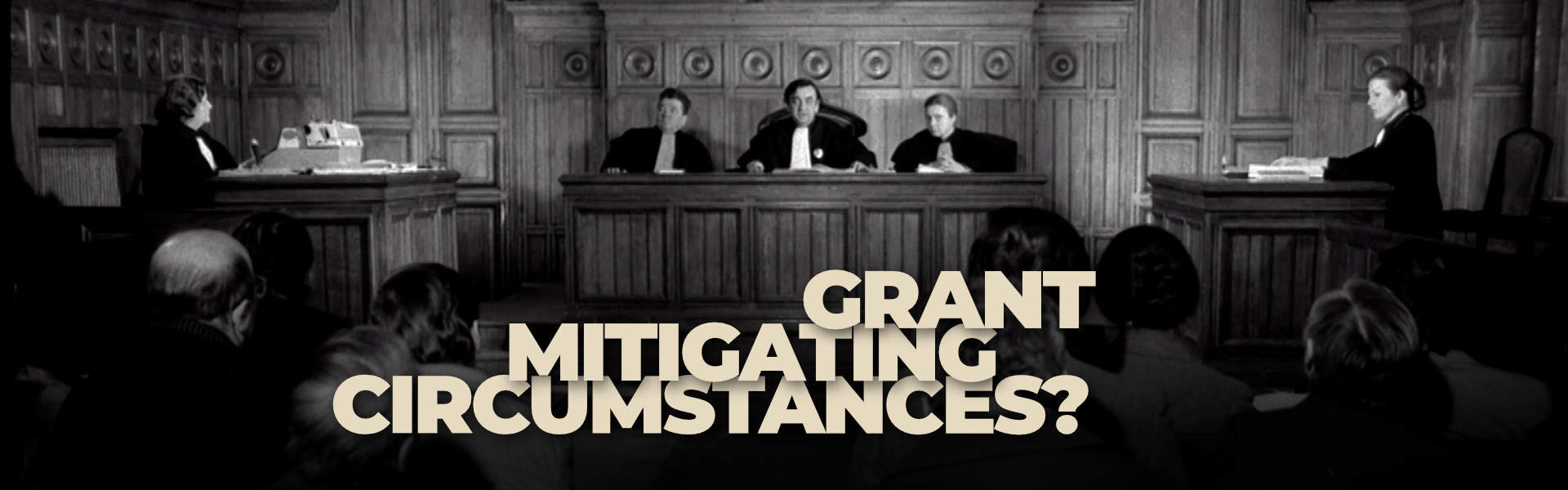
An investigation is launched following an accident at a chemical plant. During the investigation, Andrei (Gheorghe Dănilă), a young engineer at the plant, will demonstrate his moral character.
CRITICAL REVIEWS:
“Since ‘A Film with a Charming Girl’, Lucian Bratu’s filmography has been built slowly but surely on the foundation of a keen, almost passionate interest in the themes of everyday life. (…) A boundless love for the truth of life has always drawn him toward simple, human stories, toward ordinary biographies, in which he always knows how to discover the seed of the extraordinary, of nobility and grandeur.” – Eva Sîrbu, “Cinema” no. 12, December 1984, aarc.ro
“Determined to transform an industrial theme into a human one, Bratu does not hesitate to make his intention clear from the very first frames: the film opens with a stream of people pouring out of the factory gates. Once his signature is firmly established, the director calmly continues his human investigation: Arnăutu, the victim, complains that his mask is too small for his face, which is tormented by an abscess. His shift colleague, Trandafir, is also suffering from an ulcer attack. People do not let themselves be overwhelmed by their suffering; people know they must “sign up” and they sign up. Alive or dead, they sign up.” – Eva Sîrbu, “Cinema” no. 12, December 1984, aarc.ro
“It’s as if the entire crew understood the director’s struggle to make something out of nothing; the film’s ‘sections’ work flawlessly. From Liviu Pojoni’s warm, vibrant, humanizing black-and-white cinematography to Cristina Păunescu’s costumes, Marga Moldovan’s sets, and Marius Țeicu’s perfectly composed score, the entire team “pulls together” to steer the film toward a better fate than that of an “industrial theme where responsibility toward work” etc. Toward a better fate, that is, a more human one.” – Eva Sîrbu, “Cinema” no. 12, December 1984, aarc.ro
“The director is clearly trying to convey a greater depth than what’s in the script. Basically, moments of silence, glances, and a jazz soundtrack end up saying more than most of the working-class dialogue and substantially increase the film’s depth, leading us toward a social drama that seems to operate separately from the potentially dull and concrete world of the factory and the courtroom.” – Bogdan Movileanu, cinepub.ro
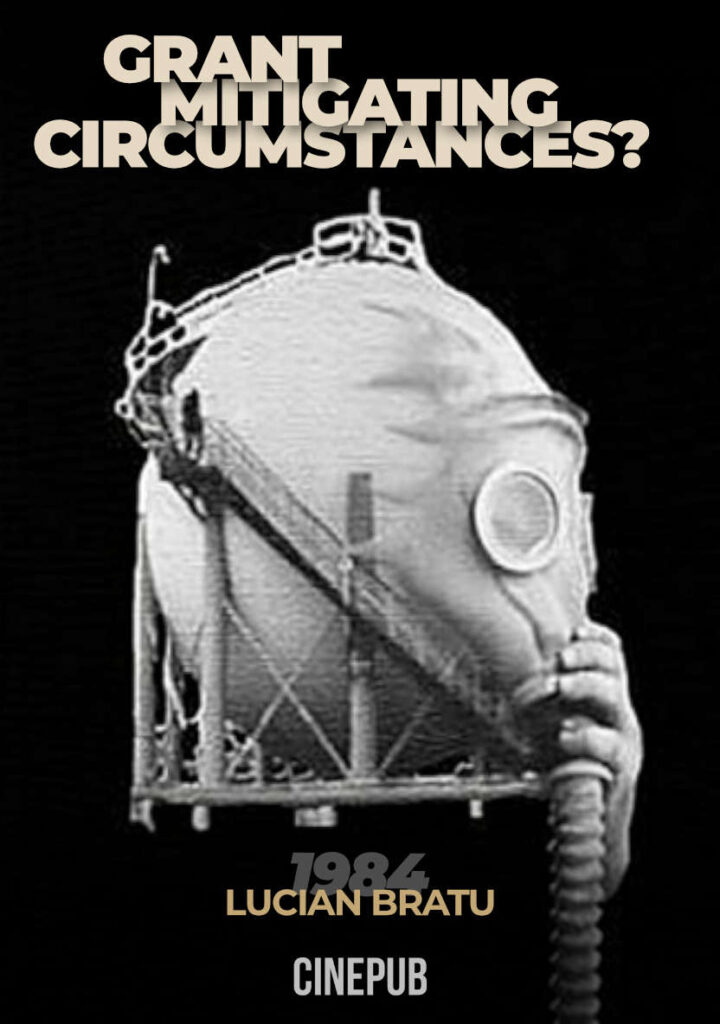
“Although the film’s screenplay is problematic, Lucian Bratu’s direction and Liviu Pojoni’s cinematography save the film. Yes, it’s about factories and workers, but in fact only the opening and the flashbacks are connected to this world, sometimes even taking on an apparent sci-fi landscape quality (What exactly is the giant sphere for? Are all those toxic gases even from Earth?). Then we get access to the interiors of homes, some of which are not at all socialist (from which we can infer that judges or engineers are somewhat better off than ordinary people), and a city appears that is filmed in the most interesting way possible.” – Bogdan Movileanu, cinepub.ro
“Judging by the film’s music (as I mentioned, with a jazz feel), composed by Marius Țeicu, we’d say it’s a world that’s as working-class as it is open to the sounds of the West, because the jazz is both diegetic and non-diegetic, and it lifts the mood of moments that might otherwise seem too serious or weighed down by the drama of the events at the factory.” – Bogdan Movileanu, cinepub.ro
TRIVIA:
- The film received the highest score in the project competition held by Film House Three. (“Cinema” No. 12, December 1984, aarc.ro)
- Director Lucian Bratu was born on July 14, 1924, in Bucharest, into a Jewish family. He graduated from the Bucharest Institute of Fine Arts in 1948 and the Union Institute of Cinematographic Art in Moscow, Russia, in 1955.
- He made his directorial debut in 1959 with the film “Secretul cifrului” (The Secret of the Cipher), an adaptation of the spy novel “La miezul nopții va cădea o stea” (At Midnight a Star Will Fall) by Theodor Constantin. This was followed by “The Kiss” (1965), “A Film with a Charming Girl” (1966), “Road in the Shadows” (1972), “The City Seen from Above” (1975), “The Bride from the Train” (1979), “Angela Goes On” (1981), “Grant Mitigating Circumstances?” (1984), and “Eleven O’Clock” (1985).
- Lucian Bratu also directed dozens of documentaries.
- Throughout his career, the director received numerous awards and distinctions, such as: the State Prize and the Grand Prize at the Mamaia National Film Festival in 1964, the Grand Prize at the Costinesti Film Festival (1978), the Prize for Best Short Documentary Film at Szolnok (Hungary), the Special Jury Prize and the Southern Cross Medal at the Buenos Aires International Film Festival, Argentina, and the Silver Statuette in Cork, Ireland, in 1964.
- After 1970, he began mentoring amateur filmmakers. From 1990, he taught directing at the Academy of Theater and Film in Bucharest (ATF).
- In 1978, he settled for a time in the United States and collaborated with screenwriter Petru Popescu on the screenplay for the film “The Last Wave” (1978), directed by Peter Weir, as well as on the production and screenplay for the film “Death of an Angel” (1987). In Romania, he had collaborated with Petru Popescu on the film “Drum în penumbră” (1972).
- The director was the first to translate J.D. Salinger’s “The Catcher in the Rye” into Romanian.
- Lucian Bratu was married and had two daughters. He died in 1998 in Bucharest. After his death, his autobiography, titled “Cu mine în rolul principal” (“With Me in the Lead Role”), was published.
LINES:
• “How can I leave my workplace? What if an inspection comes?” – Trandafir (Rudy Rosenfeld)
• “I told him not to go inside without a mask.” – Trandafir (Rudy Rosenfeld)
• “The engineer signed without checking.” – Judge Atanasiu (Cornel Revent)
• “We did our duty.” — Andrei (Gheorghe Dănilă)
• “Does the witness admit that he tried to mislead the court by making inaccurate statements?” Prosecutor Nicolau (Dorina Lazăr)
• “I made the mistake just once of abandoning certain principles that you’re not allowed to abandon.” — Andrei (Gheorghe Dănilă)
• “Don’t punish me, Comrade Engineer!” — Paraschiv (Valentin Uritescu)
• “You can’t live among people by lying.” — Ciosu (Ion Siminie)
• “Why are you whining like an old woman?” – Oancea (Tudorel Filimon)
• “The second mistake was yet to come.” – Andrei (Gheorghe Dănilă)
• “Freedom is useless, happiness is useless, everything is useless if that moment had haunted me my whole life.” – Andrei (Gheorghe Dănilă)
• “I do not ask for mitigating circumstances.” – Andrei (Gheorghe Dănilă)
ARTICLES:
- Grant Mitigating Circumstances? (1984) – aarc.ro
- Review: “Grant Mitigating Circumstances?”, by Eva Sîrbu – aarc.ro
- Lucian Bratu, Romanian film director of Jewish descent – jurnalfm.ro
- Other directors and films from the 1980s (Lucian Bratu) – istoriafilmuluiromanesc.ro
This premiere is part of a national archive project supported by the Romanian National Film Centre.
Special thanks goes to the Romanian Filmmakers Union and to the Romanian Film Archive.


